Your home office environment shapes both productivity and mindset. A statement wall serves as far more than decoration—it functions as a visual anchor, motivation source, and reflection of your professional identity. Whether building a workspace from scratch or refreshing an existing office, understanding how to create an effective statement wall transforms the entire room’s energy.
A statement wall is a focal point that commands attention through bold design choices. Unlike neutral backgrounds, it uses color, texture, pattern, or artistic elements to establish the room’s personality. In a home office, this wall becomes a strategic tool for managing focus, sparking creativity, and maintaining motivation during long work sessions. The key is intentionality—every element should serve a purpose.
The beauty of statement walls lies in their flexibility. You don’t need a massive budget, professional design experience, or permanent renovations. From paint and wallpaper to fabric, wood, or gallery arrangements, options adapt to your space, style, and commitment level.
Understanding the Purpose Behind Your Statement Wall
Before selecting colors or materials, clarify what you want your statement wall to accomplish. Different purposes call for different design strategies.
Some people use statement walls for focus enhancement. If you struggle with distractions, your wall might feature calming colors, minimal patterns, or nature-inspired imagery that settles your mind. Others prioritize creativity stimulation, choosing bold colors, dynamic patterns, or inspiring images that spark new ideas.
You might also use your wall for mood regulation. Working from home means managing your own emotional environment. A wall that shifts your perspective during difficult moments or celebrates accomplishments serves genuine psychological function.
The most effective statement walls serve multiple purposes simultaneously. A deep teal wall with subtle texture might calm your mind while conveying professionalism. A gallery wall mixing personal achievements with abstract art might inspire creativity while reinforcing your identity.
Color is the most powerful and accessible statement wall element. It influences mood, perception of space, and cognitive function.
Warm colors like terracotta, warm gray, and muted gold create welcoming, energizing environments. These work well for collaborative work, client interaction, or creative problem-solving. However, highly saturated warm colors can feel overstimulating during intense focus work.
Cool colors including deep blues, soft greens, and purples promote calm and concentration. These suit analytical work, writing, coding, or sustained attention tasks. Blue particularly supports focus and conveys trust. Green connects to nature and renewal, reducing mental fatigue. Choose muted, desaturated versions for restful effects; bright versions energize.
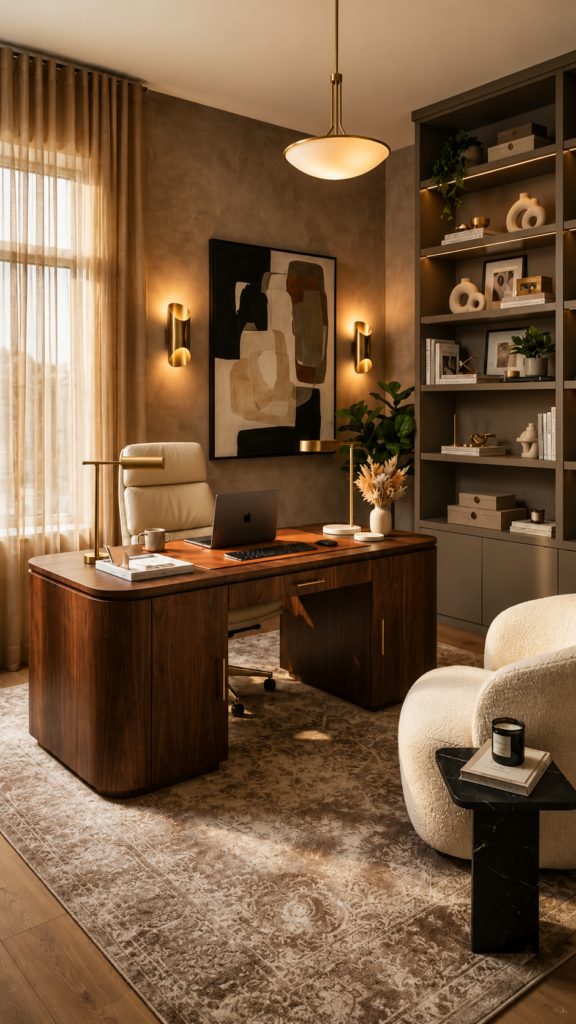
Neutral tones like warm grays and taupe create sophisticated backdrops that let other elements shine. These work when layering your wall with artwork or shelving, and provide flexibility if needs change.
Consider your room’s natural light. North-facing offices benefit from warm colors that counteract cool light. South-facing spaces with abundant warm light can handle cooler tones. Test paint samples on your wall at different times of day before committing.
Saturation matters as much as hue. Muted, desaturated colors provide visual interest while maintaining calm. A dusty sage green feels different from bright kelly green, though both are green.
Texture and Pattern Strategies
Beyond solid color, texture and pattern add dimension without sacrificing functionality.
Textured paint finishes like matte or eggshell create subtle visual interest. Textured wallpaper introduces pattern while maintaining cohesion. Grasscloth, linen-look, or geometric patterns work well professionally. Texture catches light differently throughout the day, creating dynamic effects.
Consider pattern scale carefully. Large-scale patterns make bold statements but overwhelm small spaces. Medium-scale patterns offer visual interest without domination. Small-scale patterns provide texture without distraction.
Geometric patterns convey order and modernity. Organic patterns feel natural and calming. Abstract patterns offer visual interest without literal meaning. Striped patterns can make rooms feel taller or wider.
If you spend hours looking at your statement wall, overly complex patterns become fatiguing. Simpler patterns or textured solids often work better for sustained focus.
Incorporating Artwork and Gallery Arrangements
Artwork transforms a statement wall from background to focal point. This approach offers flexibility since artwork can change without permanent alterations.
A single large piece creates immediate impact. A substantial abstract painting, oversized photograph, or commissioned artwork commands attention and sets the room’s tone. This suits minimalist preferences and works well in smaller spaces.
Gallery walls mix multiple pieces in intentional arrangements. This allows combining personal photographs, prints, artwork, and three-dimensional objects. Plan before hanging—lay pieces on the floor, arrange until balanced, then transfer to your wall. Consistency in frame style, mat color, or spacing creates cohesion.
Consider emotional content of your artwork. Motivational quotes, images of places you love, or artwork representing your values reinforce connection to your workspace. Personal photographs remind you of relationships and achievements. Abstract art stimulates creative thinking.
Mixing artwork with functional elements like floating shelves, cork boards, or pegboards creates dynamic walls serving multiple purposes. Display rotating artwork, seasonal decorations, or project inspiration alongside permanent pieces.
Lighting matters significantly. A picture light above a painting or subtle spotlighting draws attention and creates drama. Without proper lighting, even beautiful artwork disappears into shadow.
Material Choices Beyond Paint and Wallpaper

Statement walls don’t require paint or wallpaper. Alternative materials offer unique aesthetic qualities.
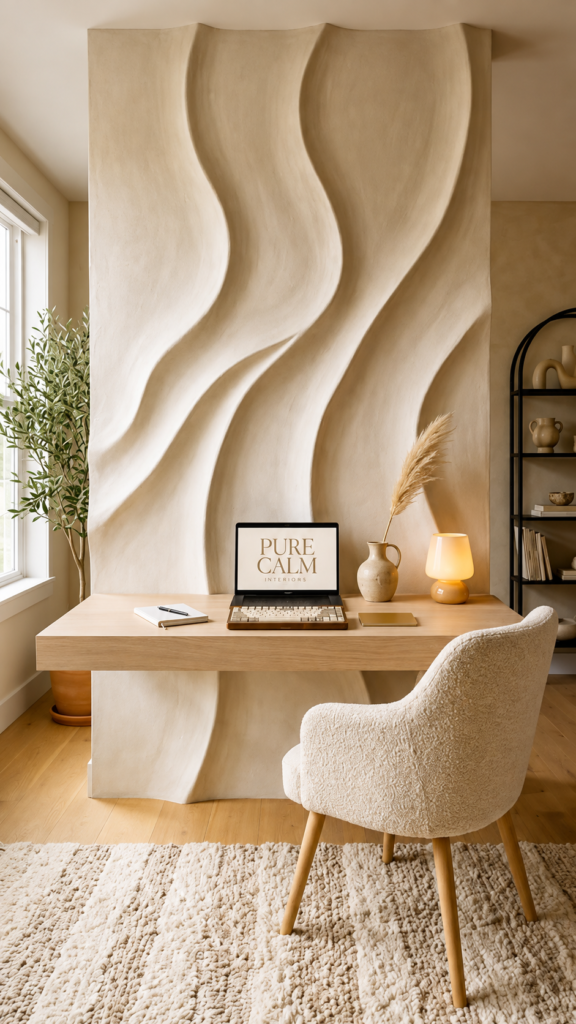
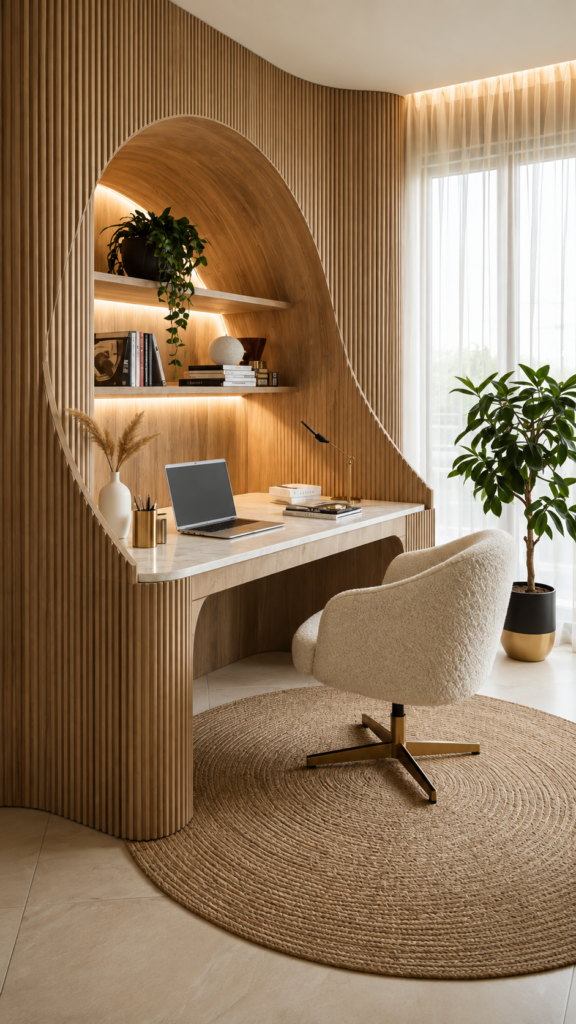
Shiplap or wood paneling creates rustic or coastal vibes while adding architectural interest. Real wood requires maintenance but develops character. Peel-and-stick wood panels offer similar aesthetics with easier installation.
Brick, stone, or concrete finishes convey industrial sophistication. Exposed brick provides authentic texture; faux brick wallpaper offers similar effects with less permanence.
Fabric-covered walls add softness and acoustic benefits. Linen, canvas, or upholstered panels create gallery-like environments. This works well for seasonal changes or frequent updates.
Cork or acoustic panels improve sound quality while creating visual interest. These work well for video calls or echo reduction.
Magnetic or chalkboard paint transforms your wall into a functional tool. Display artwork, notes, or inspiration that changes regularly. This suits creative professionals benefiting from visible brainstorming.
Wallpaper with metallic accents, embossed textures, or special finishes creates luxury effects. These materials cost more but create distinctive atmospheres.
Practical Implementation Approaches

Creating your statement wall requires planning, but execution varies based on your chosen method.
For paint, invest in quality materials and proper preparation. Prime your wall if changing to significantly different colors. Use painter’s tape for clean edges. Apply thin coats rather than one thick coat. Allow proper drying time between coats.
Wallpaper installation requires precision but doesn’t demand professional help. Measure carefully, order slightly more than needed for pattern matching, and follow manufacturer instructions. Smooth out bubbles as you work. Peel-and-stick options provide easier installation with less permanent commitment.
For artwork and gallery walls, use a level and measuring tape for straight hanging. Mark stud locations for heavy pieces. Use appropriate hardware for your wall type and artwork weight. Step back frequently to assess balance.
For shelving, ensure proper installation for safety and stability. Shelves become part of your statement wall’s visual impact, so consider their finish, depth, and spacing.
Common Mistakes to Avoid
Choosing color based on trends rather than personal preference often leads to regret. Your statement wall should feel right to you, not just fashionable.
Overwhelming your space with too much visual stimulation defeats the purpose. A statement wall should enhance focus and creativity, not create constant distraction.
Ignoring lighting creates problems. A beautiful wall color looks different under natural light, artificial light, and at different times of day. Test choices under your actual lighting conditions.
Neglecting the rest of your office creates visual discord. Your statement wall should complement your furniture, flooring, and other elements intentionally.
Choosing high-maintenance materials creates stress. If you’re not naturally tidy, light-colored wallpaper might frustrate you. If you like changing things frequently, permanent solutions might feel limiting.
Hanging artwork too high or too low disrupts visual balance. Eye level is generally correct for artwork centers. In seated offices, consider sightline height rather than standing eye level.
Adapting Statement Walls to Different Office Styles

Your statement wall should align with your overall office aesthetic.
Modern offices benefit from clean lines, minimal patterns, and sophisticated color palettes. A single accent wall in bold but refined color, or large abstract artwork, creates impact without clutter.
Traditional offices suit classic colors, artwork, and materials. Deep jewel tones, wood paneling, or gallery walls with framed artwork create timeless sophistication.
Eclectic offices embrace mixing styles, colors, and artwork. Gallery walls work particularly well, combining diverse pieces into cohesive arrangements.
Minimalist offices require restraint. A single color, one large artwork, or subtle texture creates impact through simplicity.
Industrial offices suit raw materials, exposed elements, and bold colors. Brick, concrete, or metal accents align with this aesthetic.
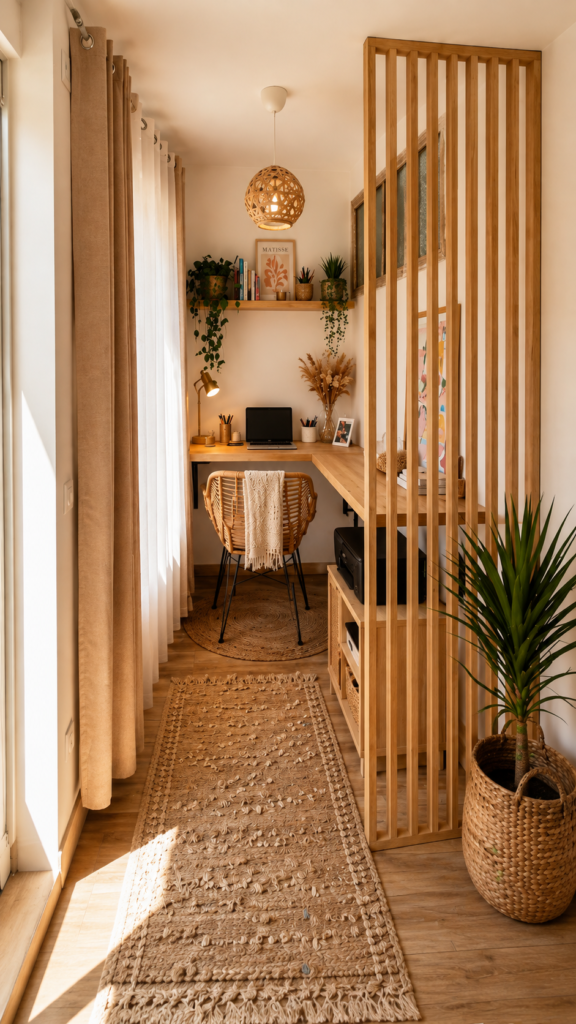
Coastal or bohemian offices embrace natural materials, warm colors, and organic patterns. Woven textures, natural wood, and nature-inspired artwork create relaxed sophistication.
Budgeting Your Statement Wall Project
Statement walls range from nearly free to expensive depending on your approach.
Paint is the most budget-friendly option. Quality paint costs 30 to 100 dollars total for most accent walls.
Wallpaper costs vary dramatically. Basic peel-and-stick wallpaper runs 20 to 50 dollars per roll. Premium wallpaper costs 50 to 150 dollars per roll. A typical accent wall requires 4 to 8 rolls.
Artwork costs depend entirely on your choices. Prints cost 20 to 100 dollars. Original artwork costs significantly more. Creating a gallery wall with personal photographs costs 50 to 300 dollars depending on frame quality.
Alternative materials like shiplap or brick finishes cost 100 to 500 dollars depending on material quality and wall size.
If budget is limited, start with paint or peel-and-stick wallpaper for maximum impact with minimum investment. Add artwork gradually over time.
Maintenance and Updating Your Statement Wall
Statement walls require different maintenance depending on materials chosen.
Painted walls need occasional touch-ups and cleaning. Keep leftover paint for future repairs. Dust regularly to maintain color vibrancy.
Wallpaper requires gentle cleaning with appropriate methods. Avoid excessive moisture. Check edges periodically for peeling.
Artwork needs dusting and occasional cleaning. Protect valuable pieces with glass. Rotate artwork periodically to refresh your space.
Updating your statement wall doesn’t require starting over. Paint over existing paint, replace wallpaper, swap artwork, or add elements to existing designs. Many people refresh seasonally or when work focus shifts.