Modern and distinctive home decor that you will find here
Wall Molding Ideas for Living Rooms !
| Kaouthar
A plain living room wall can make even nice furniture feel unfinished.
You may have a good sofa, a pretty rug, and nice lighting. But the room still feels flat. That is where wall molding ideas for living rooms can help.
Wall molding adds shape, depth, and style without changing the whole room. It can make a simple wall look custom. It can also help your living room feel warmer, cleaner, and more planned.
The good news is that you do not need a huge budget. Some wall molding projects can be done on one accent wall. Others work better with a pro, especially if you want full paneling, crown molding, or detailed wainscoting.
In this guide, you will learn the best living room wall molding ideas for 2026. You will also learn where to use each style, how to pick paint colors, what mistakes to avoid, and how to plan your layout before buying materials.
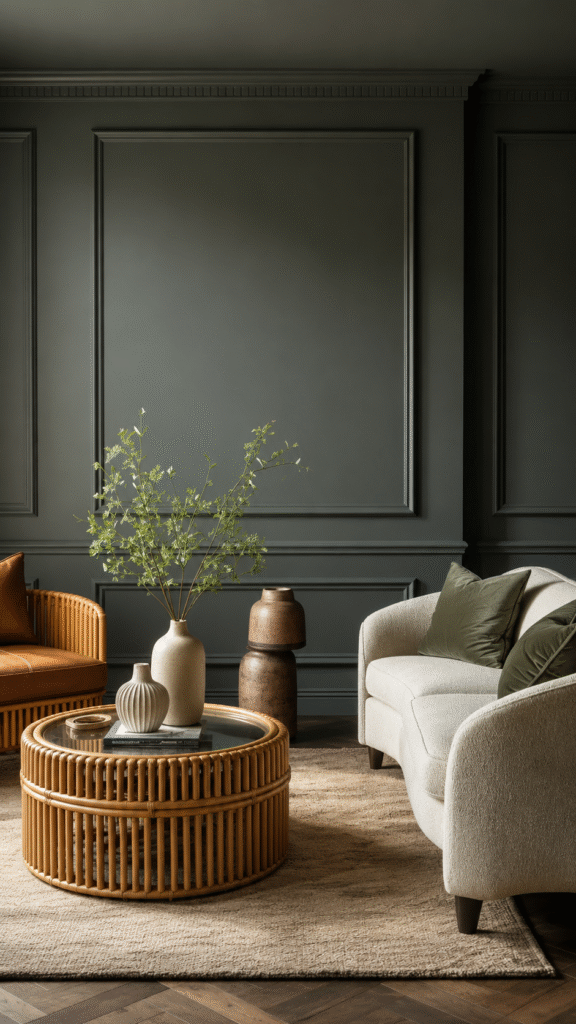
Houzz says built ins, paneling, and detailed millwork are adding more character to homes in 2026. Earthy colors, stained wood, olive green, taupe, deep brown, muted blue, and burgundy are also strong choices this year.
Wall molding ideas for living rooms work because they fix one big problem. Most living rooms have at least one flat wall that feels empty.
That wall may be behind your sofa. It may be around your TV. It may be beside a fireplace. Without detail, the space can feel plain, even when the furniture is nice.
Wall molding gives that blank wall a clear shape. It adds lines, shadows, and structure. This makes the room feel more finished.
It also helps a basic living room feel more custom. A builder grade wall can look plain because it has no trim, no panels, and no visual depth. Decorative wall trim changes that fast.
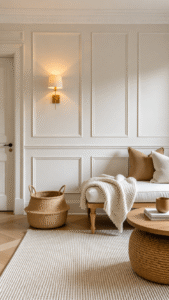
You can keep the look soft by painting the molding the same color as the wall. This works well in small rooms because it does not feel too busy.
You can also paint the trim in a contrast color. White trim on a navy wall feels classic. Beige trim on a warm taupe wall feels calm. Black trim on a white wall feels bold.
Wall molding is also less messy than many big home projects. You are not moving walls. You are not replacing the whole room. You are adding detail where the room needs it most.
This is why living room wall molding ideas are so useful. They give you a clear way to improve a room without starting over.
Picture Frame Molding for a Classic Living Room Wall
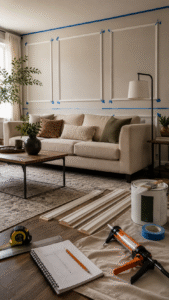
DIY picture frame molding is one of the easiest wall molding styles to understand. It uses trim pieces to create simple rectangles on the wall.
These rectangles look like empty picture frames. They add shape without taking up floor space. This makes them great for living rooms, dining rooms, hallways, and small apartments.
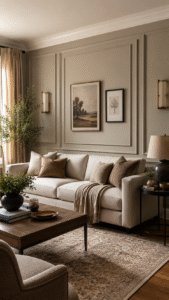
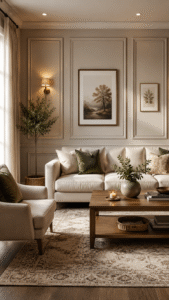
Picture frame molding works very well behind a sofa. It also looks good around a fireplace, above a console table, or behind a pair of accent chairs.
For a sofa wall, keep the molding boxes wider than they are tall. This helps the wall feel balanced. Center the middle box behind the sofa. Then keep the side boxes the same size.
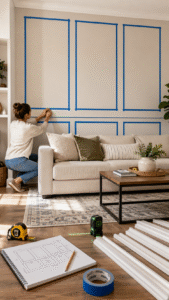
Spacing matters here. If the gaps are uneven, the whole wall can look off. Use painter’s tape first. Tape the boxes on the wall before you cut anything.
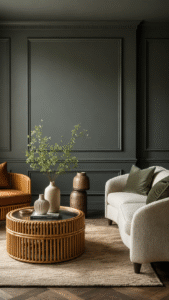
Paint can change the whole mood. White picture frame molding feels classic. Beige or greige feels soft. Olive green feels warm and current. Navy feels rich. Black feels bold.
For a calm living room, paint the molding and wall the same color. The shadows will still show the trim. But the final look will feel smooth and expensive.
HGTV describes picture frame molding as a simple wall treatment that can give a classic look and help highlight framed art. That makes it a smart choice if you want a polished wall without a hard project.
Best for:
Plain sofa walls
Formal living rooms
Small apartments
Budget makeovers
Beginner DIY projects
Simple rule: keep the boxes even, keep the spacing even, and line the layout up with your furniture.
Board and batten is a good choice when your living room feels cold or empty.
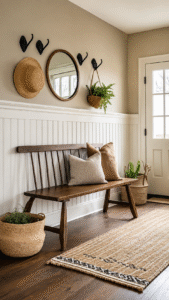
This style uses vertical boards to create a steady pattern on the wall. It can feel cozy, clean, and casual. It works well in cottage, farmhouse, coastal, and transitional living rooms.
You can use board and batten on the lower part of the wall. This is a good choice if you want detail but still want the room to feel light.
You can also run it from floor to ceiling. This gives the wall more height and drama. It works best on one main wall, such as the wall behind the sofa or fireplace.
Spacing changes the look. Wider spacing feels more modern. Narrow spacing feels more classic.
If your living room is small, use simple trim and paint everything one color. This keeps the room from feeling chopped up.
If your room is large, you can use wider boards and taller panels. This gives the wall more weight.
Board and batten also helps if your living room needs texture but not too much detail. It is cleaner than fancy panel molding. But it still gives the wall a finished look.
This Old House explains that wainscoting and similar wall treatments need careful planning, measuring, and cutting. That same rule applies here. Good measuring is what makes board and batten look neat.
Best for:
Cozy living rooms
Farmhouse style
Coastal style
Long blank walls
Lower wall detail
Board and batten is one of the most flexible wall molding ideas for living rooms because it can feel casual, clean, or classic.
Modern Wall Molding Design for a Clean Living Room
Modern wall molding design does not need to look fancy. In fact, the best modern molding is often simple.
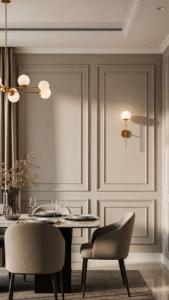
Use thin trim. Use large boxes. Use clean vertical lines. Use one wall color. Keep the layout calm.
This works because modern rooms already have many shapes. You may have a low sofa, round coffee table, large art, floor lamp, curtains, and a TV. If the wall molding is too busy, the room can feel crowded.
Large panels are better than many small boxes. They make the wall feel taller and cleaner.
You can use modern molding in a few ways.
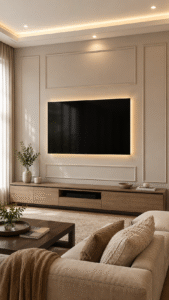
One option is a full wall with large rectangular panels. Another option is two tall panels beside the fireplace. You can also use one large frame behind the TV area.
Wood tone molding is also a good choice in 2026. It adds warmth without needing bright color.
Decorilla reports that textured and geometric wood surfaces are part of 2026 design trends. Architectural Depot also points to fluted and reeded millwork as a way to add texture and craft to a space.
Modern molding formula:
Large panels Thin trim One wall color Simple furniture Soft lighting
Best for:
Clean living rooms
Small modern spaces
TV walls
Neutral rooms
Homes with simple furniture
A good modern wall does not need a lot of trim. It needs the right trim in the right place.
Wainscoting Ideas for Living Rooms With Traditional Style
Wainscoting is a strong choice if your living room needs structure.
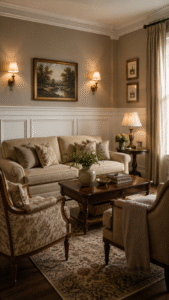
It usually covers the lower part of the wall. The top part stays painted, wallpapered, or plain. This gives the wall balance.
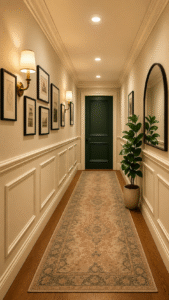
Wainscoting works well in formal living rooms. It also fits older homes, homes with traditional trim, and rooms connected to an entry or hallway.
The common starting point is about one third of the wall height. But you should not follow that rule blindly. Look at your sofa, windows, fireplace, and ceiling height first.
If the wainscoting stops at an awkward height, the room can feel wrong. If it lines up with furniture and trim, it feels planned.
Living room wall molding ideas like wainscoting can also help protect lower walls. This is useful if you have kids, pets, or a busy home.
Paint can make wainscoting feel fresh. White wainscoting is classic. Taupe feels warm. Deep green feels rich. Same color wainscoting and wall paint feels softer and more modern.
Cost matters here. Angi says wainscoting costs can range from about $1,050 to $2,400, depending on the material, wall size, style, labor, and prep work.
Best for:
Traditional living rooms
Formal spaces
Older homes
High traffic homes
Rooms that need lower wall detail
Wainscoting can cost more than simple picture frame molding because it uses more material and more finish work.
Full wall panel molding works best when one wall needs to become the main feature.
This could be the sofa wall. It could be the fireplace wall. It could also be the TV wall if the layout is simple.
The goal is to make the wall feel custom. But it should still match the room.
Large walls need larger panels. Small boxes on a big wall can look messy. They can also make the wall feel too busy.
Before you choose a pattern, draw the room’s main items on paper. Mark the sofa, TV, fireplace, sconces, outlets, art, and windows. This helps you see where the molding should stop and start.
Lighting also matters. Wall molding looks better when light hits the edges. Sconces, picture lights, and warm lamps can help the shadows show.
If you want a luxury look, keep the finish clean. Caulk the gaps. Fill the nail holes. Sand the rough spots. Use good paint.
Angi says wall paneling installation often costs $7 to $25 per square foot, depending on the material and project complexity. Homewyse lists May 2026 crown molding installation starting around $14.28 to $21.85 per linear foot.
Best for:
Large sofa walls
Fireplace walls
Formal living rooms
Rooms with high ceilings
Luxury feature walls
Full panel molding is one of the boldest wall molding ideas for living rooms, so use it where it can shine.
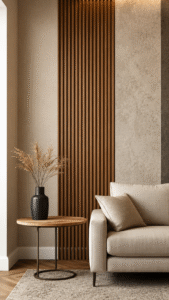
Fluted, reeded, and wood slat walls are good choices if you want texture without classic trim boxes.
These styles feel warmer and more modern. They work well on TV walls, fireplace walls, and small accent areas.
Wood slats can make a room feel cozy. Walnut feels rich. Oak feels light and natural. Black stained wood feels moody.
Fluted and reeded panels add fine lines. They create soft shadows. This makes the wall feel detailed without adding a lot of color.
Use these styles in controlled areas. A full room of wood slats can feel heavy. One wall or one section usually works better.
For a TV wall, use wood slats beside the screen or behind a low media unit. For a fireplace wall, use fluted panels on each side or above the mantel.
These styles also work well with simple furniture. Use a plain sofa, soft rug, and warm lamps. Let the wall texture do the work.
Modern wall molding design in 2026 is moving into warmer texture, not just painted trim. Houzz also notes that stained woods and earthy tones are part of the 2026 look.
Best for:
Modern living rooms
TV walls
Fireplace walls
Warm neutral rooms
Small accent areas
Use wood detail where you want the eye to stop.
Wall Molding Around a TV Without Making It Look Busy
The screen is already a big black rectangle. If you add too many small molding boxes around it, the wall can feel crowded.
Start simple. Keep molding lines away from the screen edges. Leave some clean wall space around the TV so the trim does not fight with it.
One large frame behind the media area can work. Two vertical panels on each side can also work. Wood slats behind or beside the TV can look clean if the wires are hidden.
Hide wires before installing molding. This matters. A beautiful wall still looks messy if cords hang under the screen.
Also think about the media cabinet. The molding should work with its width. If the cabinet is wider than the TV, the molding layout should respect that.
Living room wall molding ideas for TV walls should be calm. The TV should look built into the design, not trapped inside a busy frame.
Try this test before installing anything. Sit on the sofa and look at the taped layout. If your eye goes to the trim before the TV, the design may be too busy.
Best for:
Media walls
Small living rooms
Modern rooms
Open concept spaces
Family rooms
Simple TV wall rule: fewer lines usually look better.
Best Wall Molding Paint Colors for Living Rooms in 2026
Wall molding paint colors can change the whole room.
If you want a soft look, paint the wall and molding the same color. This makes the trim look built in. It also works well in small living rooms.
If you want a classic look, use white molding with a colored wall. This works well with navy, sage, taupe, greige, and soft blue.
If you want a bold look, use a dark color across the whole wall. Deep green, dark blue, brown, and burgundy can make molding feel rich.
Earthy tones are strong in 2026. Houzz points to olive green, taupe, deep brown, muted blue, burgundy, and stained wood as key colors and finishes.
Soft pastels can also work, but use them with care. Good Housekeeping reports that buttercream yellow, baby blue, soft pink, and mint green are getting attention in 2026. Designers suggest using them with restraint so the room still feels grown up.
Good paint pairings:
Wall color
Molding color
Best look
Greige
Same greige
Soft and calm
Olive green
Same olive
Warm and rich
Navy
White
Classic contrast
Taupe
Same taupe
Quiet and cozy
Deep brown
Same brown
Moody and elegant
Soft blue
White
Fresh and light
Always test paint on the actual wall. Molding creates shadows, so the color can look darker after the trim is installed.
How to Plan a Wall Molding Layout Before You Buy Materials
The biggest mistake is buying trim before planning the wall.
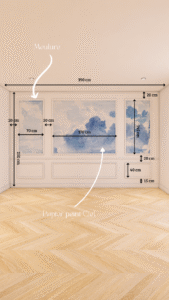
Start with the wall you want to change. Measure the full width and height. Write the numbers down.
Then mark the things that cannot move. This includes outlets, light switches, vents, windows, doors, TV mounts, sconces, and baseboards.
Next, think about your furniture. Mark the sofa height. Mark the TV size. Mark where art or mirrors may hang.
Now choose the focal wall. Do not start with the whole room if you are unsure. One good wall is better than four busy walls.
Use painter’s tape to test the layout. Tape the molding boxes or lines right on the wall. Step back. Sit on the sofa. Take a photo.
Photos help because they show mistakes your eyes may miss.
Keep spacing even. If you use 4 inches between one box and the next, keep that same spacing across the wall. If your room is small, use thinner trim and fewer boxes.
DIY picture frame molding is a good beginner project because the pattern is simple. But it still needs careful measuring.
Better Homes & Gardens notes that wainscoting installation includes steps like measuring, marking level lines, cutting around outlets, fastening panels, caulking, sanding, and painting. That is a good reminder that prep and finish work matter as much as the trim itself.
Simple layout checklist:
Pick one focal wall.
Measure the wall.
Mark outlets and switches.
Mark furniture height.
Tape the design.
Take a photo.
Adjust the spacing.
Buy materials after the layout feels right.
One hour of planning can save you from wasted trim, bad cuts, and a wall that feels off.
Most bad wall molding projects fail before the trim goes up.
The first mistake is starting without a layout. You may think you can figure it out as you go. But uneven boxes and strange spacing are hard to fix later.
The fix is simple. Tape everything first.
The second mistake is ignoring outlets and switches. A trim piece that hits an outlet looks messy. Plan around every wall item before cutting.
The third mistake is making the boxes too small. Tiny boxes can make a living room look busy. Use larger boxes for larger walls.
The fourth mistake is using trim that is too thick for a small room. Thick trim can feel heavy. Thin trim usually works better in apartments and small living rooms.
The fifth mistake is skipping caulk and sanding. This is where many DIY projects fall short. The trim may be straight, but the gaps and nail holes make it look unfinished.
The fix is to fill nail holes, sand rough spots, caulk gaps, prime if needed, and paint with care.
The sixth mistake is painting too soon. Let caulk and filler dry first. Read the product label so you do not rush the finish.
The seventh mistake is forgetting the furniture. A molding box hidden behind the sofa arm may look strange. Plan the layout with the furniture in place.
Wall molding ideas for living rooms work best when the trim, furniture, paint, and lighting all feel connected.
Budget Guide for Wall Molding Ideas for Living Rooms
Wall molding ideas for living rooms can be low cost or expensive. It depends on the wall size, trim type, material, labor, and paint finish.
DIY picture frame molding is usually the most budget friendly choice. You can use it on one sofa wall and keep the layout simple.
Board and batten can also be budget friendly, but it may need more boards. Full wall paneling costs more because it uses more material and takes more time.
Wainscoting often costs more than a simple accent wall. Angi says wainscoting projects can run from about $1,050 to $2,400, depending on material, square footage, and prep work.
Wall paneling can also vary a lot. Angi says wall paneling installation can cost $7 to $25 per square foot, based on material and complexity. Homewyse lists wall paneling at about $7.78 to $11.55 per square foot as a May 2026 national starting range.
Crown molding adds another cost. Homewyse lists May 2026 crown molding installation starting around $14.28 to $21.85 per linear foot.
Budget ideas:
Budget level
Best idea
Low budget
One sofa wall with thin picture frame molding
Medium budget
Board and batten or lower wall wainscoting
Higher budget
Full wall panel molding with crown and pro paint
Smart tip: buy extra trim for mistakes and angled cuts. A small waste allowance is better than stopping the project because one piece is short.
Which Wall Molding Style Should You Choose?
Use your room problem to pick the right style.
Your problem
Best molding idea
Plain sofa wall
Picture frame molding
Small living room
Thin trim painted the same wall color
Big blank wall
Full wall panel molding
TV wall feels messy
Simple vertical molding or wood slats
Room feels cold
Warm wood slat or reeded panels
Formal room feels flat
Wainscoting or raised panel molding
You can also choose by your home style.
Living room style
Best molding choice
Modern
Thin trim, large boxes, fluted panels
Farmhouse
Board and batten
Traditional
Wainscoting or raised panels
Transitional
Picture frame molding
Luxury
Full wall molding with sconces
Apartment
One painted accent wall with lightweight trim
Start with the wall that bothers you most. That is usually the best place to spend your time and money.
FAQs About Wall Molding Ideas for Living Rooms
Is wall molding still in style in 2026?
Yes. Wall molding is still in style in 2026. Current design reports show that paneling, millwork, stained wood, and traditional details are still popular. Houzz says paneling and detailed millwork are adding character to homes in 2026.
What is the cheapest wall molding idea for a living room?
DIY picture frame molding on one accent wall is usually the cheapest choice. It uses simple trim and a repeatable layout.
Can wall molding work in a small living room?
Yes. Use thin trim, fewer boxes, and one wall color. This adds detail without making the room feel crowded.
Should wall molding be lighter or darker than the wall?
Same color molding feels soft and modern. Lighter molding feels classic. Dark molding feels bold and dramatic.
Which wall should get molding in a living room?
Start with the wall behind the sofa, fireplace, or TV. These walls already act like focal points, so molding looks natural there.
Wall molding can turn a plain living room into a room that feels finished.
Picture frame molding is a smart choice for beginners. Board and batten adds cozy texture. Wainscoting gives the room a classic look. Fluted panels and wood slats feel warmer and more modern.
Before you buy materials, start with one wall. Tape the layout. Take a photo. Check how it looks with your sofa, TV, art, and lighting.
The best wall molding ideas for living rooms are the ones that fit your space, your budget, and your real life. Start simple, measure well, and let the wall support the room instead of stealing all the attention.