
Creating a welcoming kitchen space can feel like a daunting task, especially when trying to balance style with functionality. That’s why I put together this post on 25 Japandi kitchen ideas. This design trend is all about combining the clean lines of modern minimalism with the warmth of Scandinavian aesthetics. You might be wondering how to achieve this look in your own home, or maybe you’re just eager to explore new decor styles. Either way, this guide is here to help.
If you love the idea of a serene space that feels both cozy and uncluttered, you’re in the right place. Whether you’re an aspiring chef or someone who enjoys casual family meals, a well-designed kitchen can make a huge difference in your everyday life. This post is for anyone looking to refresh their cooking space without sacrificing comfort or style. You’ll find inspiration that resonates with your desire for a clean, yet warm atmosphere.
Within these 25 ideas, you will discover practical tips to create a Japandi kitchen that suits your lifestyle. From choosing an understated color palette to incorporating natural materials, each suggestion is tailored to enhance your space. Expect insights on maximizing natural light, smart storage solutions, and how to blend old and new elements seamlessly. With these ideas, you can transform your kitchen into a haven of simplicity and tranquility, making it the heart of your home.
Let’s dive in and explore how to bring the warmth and minimalism of Japandi design into your kitchen!
Key Takeaways
– Explore the power of open shelving to create a clutter-free and inviting kitchen atmosphere.
– Use a neutral color palette to evoke calmness while allowing for personal touches.
– Incorporate natural wood and stone elements for warmth and texture in your space.
– Take advantage of natural light to enhance the ambiance and showcase your kitchen’s best features.
– Learn how to blend modern functionality with traditional charm through thoughtful decor choices.
Contents
- 1. Open Shelving for Minimalist Appeal
- 2. Understated Color Palette
- 3. Natural Wood Elements
- 4. Japanese-Style Sliding Doors
- 5. Functional Kitchen Islands
- 6. Earthy Texture with Stone Accents
- 7. Emphasis on Natural Lighting
- 8. Minimalist Decor and Accessories
- 9. Warm Textiles and Fabrics
- 10. Eco-Friendly Materials
- 11. Subtle Patterns and Textures
- 12. Smart Storage Solutions
- 13. Thoughtful Lighting Design
- 14. Multi-Functional Spaces
- 15. Incorporation of Greenery
- 16. Classic Japanese Ceramics
- 17. Artisanal Craftsmanship
- 18. A Blend of Old and New
- 19. Clear Lines and Simple Geometry
- 20. Breathe Life Through Art
- 21. Timeless Design with a Modern Twist
- 22. Seasonal Decor Updates
- 23. Personalized Touches
- 24. Serenity Through Symmetry
- 25. Create an Inviting Atmosphere
1. Open Shelving for Minimalist Appeal
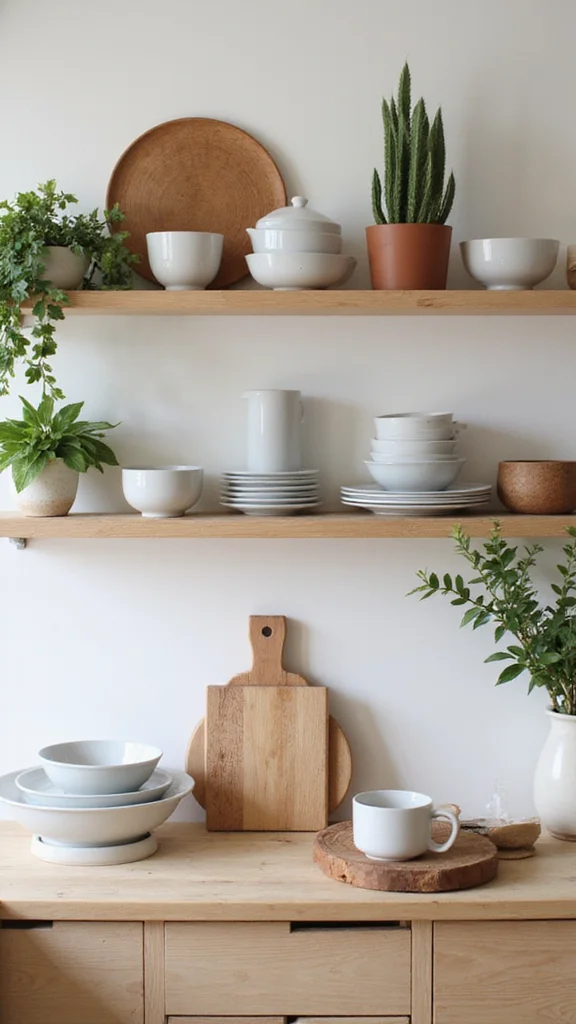
Open shelving brings a fresh and open feel to your kitchen. You can display beautiful dishes, colorful mugs, or even small plants that add life. Think about using warm wooden shelves with sleek white dishware to create a lovely contrast. Pinterest often highlights this trend, showing how it can transform any kitchen into a charming space.
To get started, consider thrifted shelves for a budget-friendly option. Group your items by color or style for a cohesive look. Keep items you use often within reach for convenience. This design makes your kitchen feel personal and bright, perfect for family gatherings.
• Use wooden shelves for warmth and texture.
• Group items in odd numbers for visual appeal.
• Add small plants for a touch of life.
• Keep rarely used items out of sight for a clean look.
With these tips, open shelving can make your kitchen feel stylish and inviting.
2. Understated Color Palette
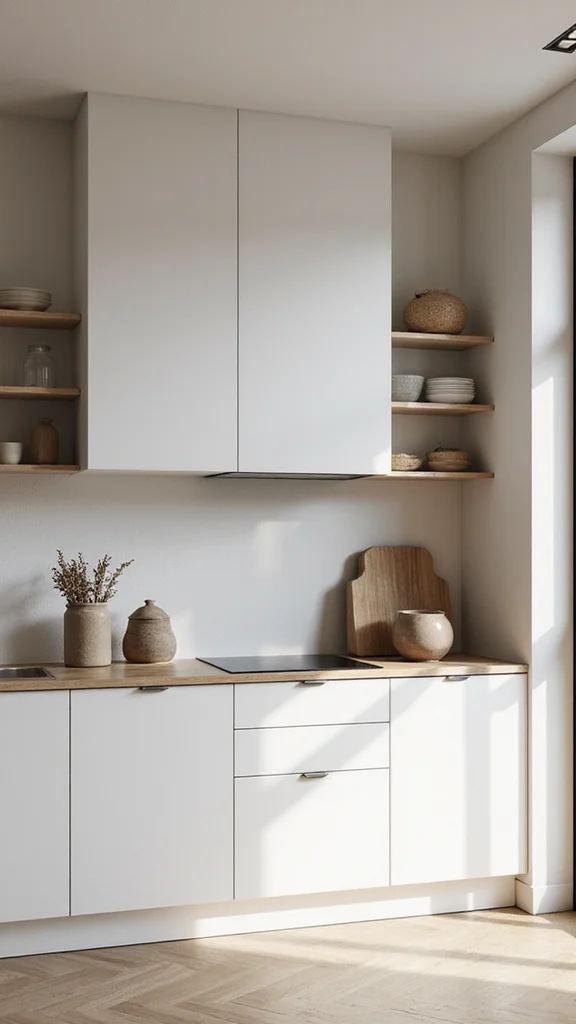
A Japandi kitchen shines with a gentle color palette of soft whites and earthy tones. This understated approach creates a calm and inviting atmosphere, letting natural light flow freely. For example, you might use beige cabinets with gray accents or bring in muted greens for a subtle splash of color. This style is popular on design platforms where simplicity reigns.
To choose your palette, start with warm neutrals and add soft colors that match. Natural materials like wood can enhance the earthiness of your space. This thoughtfully chosen palette ensures your kitchen feels serene and elegant, making cooking a joy.
• Start with warm neutrals for a calming base.
• Add soft accent colors for interest.
• Use natural materials like wood for warmth.
• Keep finishes light to enhance brightness.
This color palette creates a kitchen that feels peaceful and welcoming.
3. Natural Wood Elements
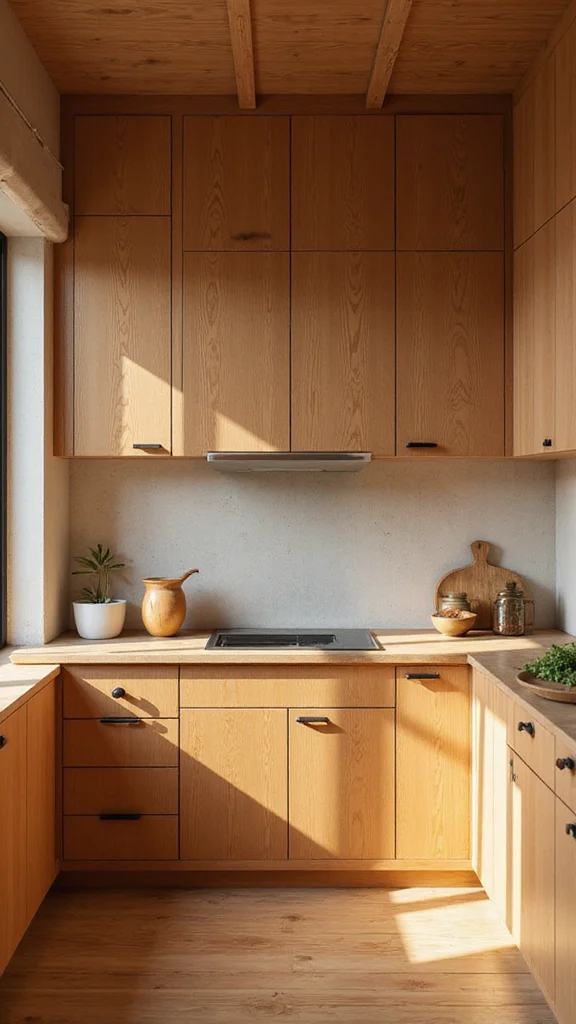
Incorporating natural wood adds warmth and character to your Japandi kitchen. Whether you choose wooden cabinets or reclaimed wood countertops, each piece enhances the space’s charm. Using similar wood tones throughout creates a cohesive look. This trend resonates with many who appreciate nature-inspired designs.
To achieve this, opt for light woods like birch for cabinets and richer options like walnut for countertops. Wooden utensils and decor can tie the whole theme together. Natural wood elements connect your kitchen to nature, making it feel warm and inviting.
• Choose light wood for airy cabinetry.
• Add a rich wood countertop for contrast.
• Use wooden utensils to complement decor.
• Stick to similar tones for harmony.
With these wood elements, your kitchen gains a cozy and inviting atmosphere.
4. Japanese-Style Sliding Doors
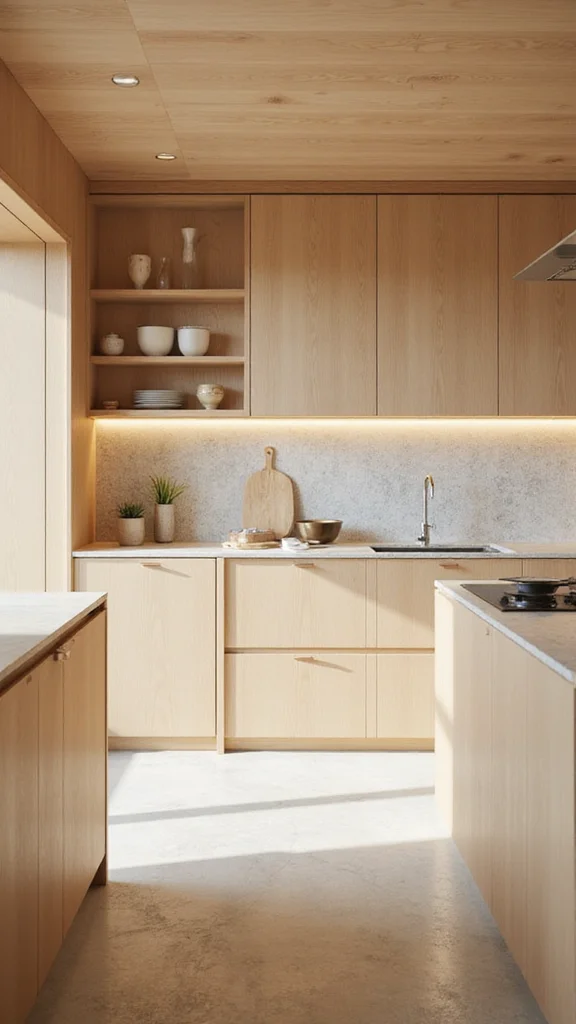
Japanese-style sliding doors, or shoji doors, can enhance the beauty of your kitchen. These doors save space while creating a peaceful ambiance that fits Japandi design. A light wood frame with translucent panels allows sunlight to brighten your space while ensuring privacy. This feature can be a striking addition to your kitchen.
When choosing sliding doors, find a design that matches your kitchen style. Ensure the materials harmonize with your earthy tones. These doors work beautifully as a way to separate your kitchen from a pantry or dining area, adding both function and beauty.
• Choose a design that matches your kitchen style.
• Use materials that reflect earthy tones for cohesion.
• Install them to lead to a pantry or storage area.
• Keep frames light to maintain an airy feel.
This addition makes your kitchen not only practical but also visually stunning.
5. Functional Kitchen Islands
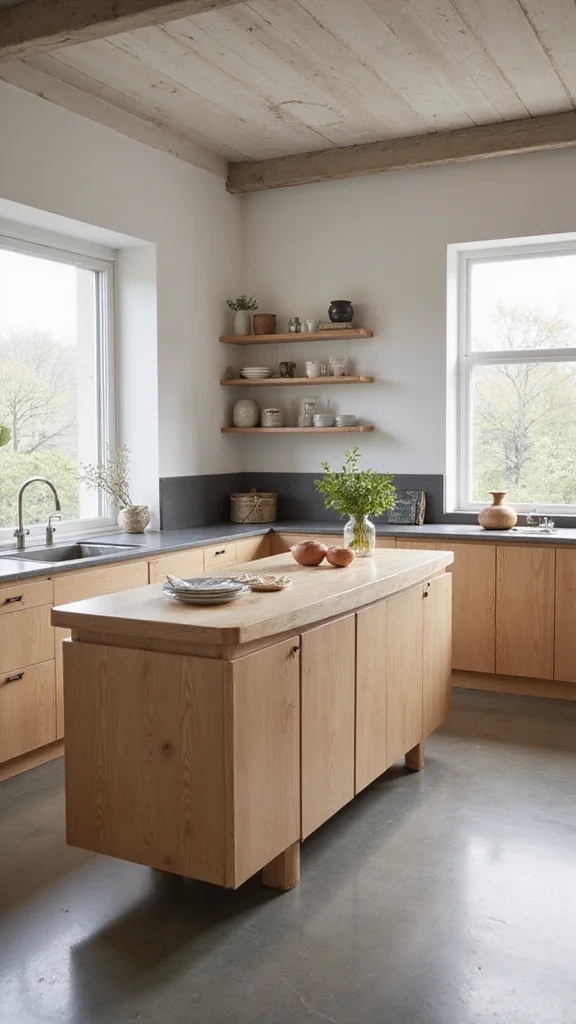
A thoughtfully designed kitchen island serves as a central feature in a Japandi kitchen. Choose a minimalist island made from natural materials like stone or wood to combine style and function. This space can serve as a prep area, dining spot, or social hub during family gatherings. Its versatility is key in modern kitchens.
When designing your island, prioritize a clean design with straight lines. Add storage options like shelves or drawers underneath for practicality. Using a contrasting material can also make it a striking focal point in your kitchen.
• Select a minimalist design for simplicity.
• Incorporate storage solutions to maximize space.
• Use a contrasting material for visual interest.
• Ensure it’s large enough for multiple uses.
A well-planned island will make your kitchen both functional and beautiful.
6. Earthy Texture with Stone Accents

Adding stone accents to your kitchen brings a refined yet rugged feel. Materials like granite, marble, or slate create a stylish contrast to softer elements, adding depth to your design. You can use stone for countertops or backsplashes, ensuring a smooth finish that complements wooden features. This touch is trending among those who love natural beauty.
Pair a dark stone countertop with light wooden cabinets for a stunning look. Textured stone tiles for the backsplash can add visual interest. Warm lighting can highlight these stone features, enhancing their beauty and creating a welcoming vibe.
• Use dark stone for a dramatic countertop.
• Choose textured tiles for a backsplash.
• Highlight stone features with warm lighting.
• Ensure stone complements your wood elements.
These accents create a tactile experience that enriches your kitchen.
7. Emphasis on Natural Lighting
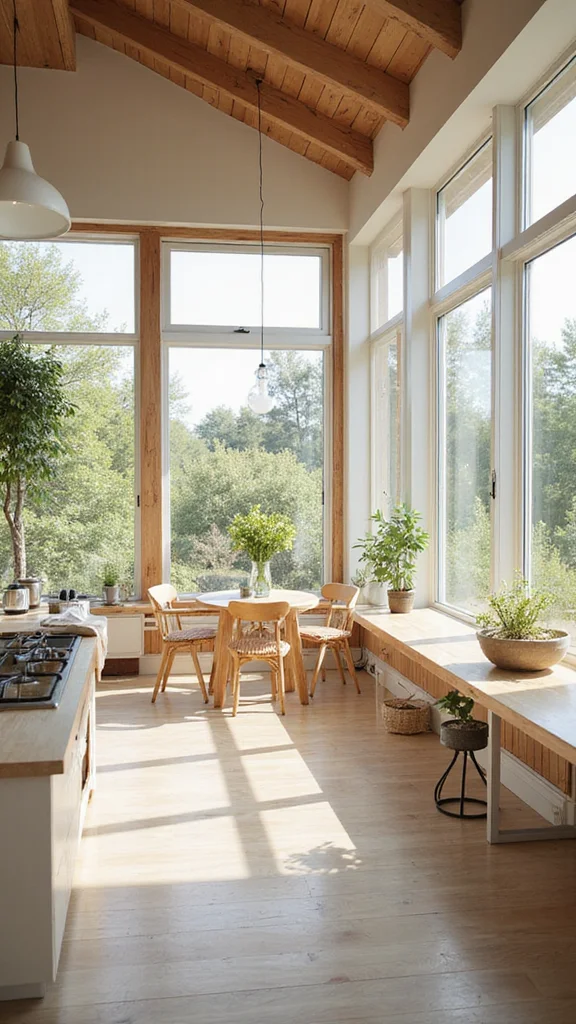
Natural light is a key feature of Japandi design. Bright and airy spaces not only feel larger but also connect you with the outdoors. Consider adding large windows to bring in sunlight or using skylights for extra brightness. This connection to nature is essential for a soothing kitchen atmosphere.
Use sheer window treatments to let light in while maintaining privacy. Choose light-colored finishes that reflect sunlight and enhance brightness. Keeping window sills clear helps draw the eye outside, making your kitchen feel open and inviting.
• Install large windows for maximum light.
• Use sheer curtains for soft illumination.
• Keep finishes light-colored to reflect light.
• Maintain clear window sills for a bright view.
By maximizing natural light, your kitchen becomes a cheerful and uplifting space.
8. Minimalist Decor and Accessories
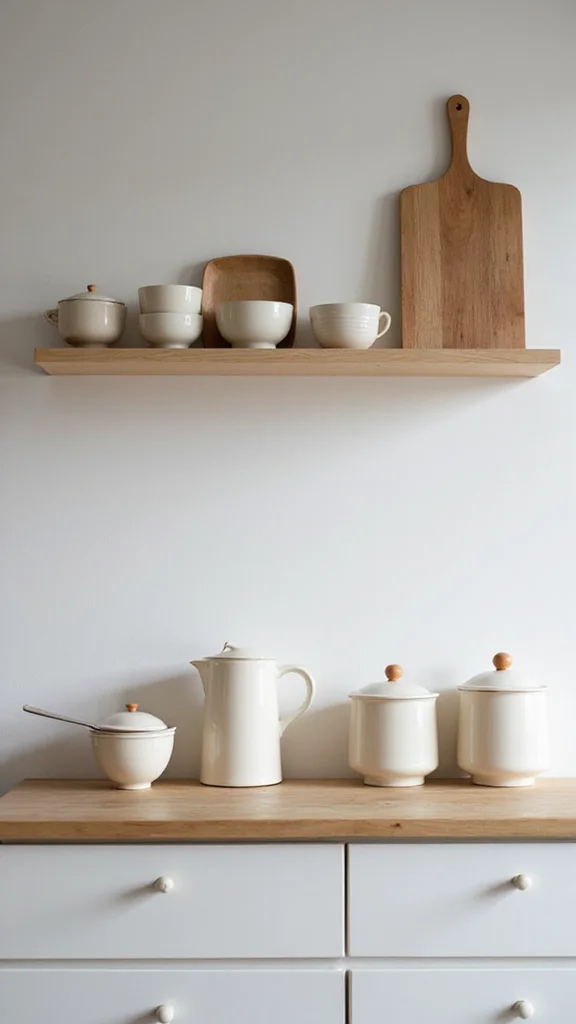
In a Japandi kitchen, embracing the ‘less is more’ philosophy shines. Opt for minimalist decor that enhances the clean lines of your space. Select a few carefully chosen pieces that reflect your style while adding charm. This approach transforms your kitchen into a serene oasis.
Choose functional items that also serve as decor, like stylish cutting boards or elegant pots. Stick to a limited color scheme for displayed items to maintain harmony. Embrace negative space by avoiding clutter on surfaces, creating a calm visual appeal.
• Select functional decor for utility and beauty.
• Use a limited color scheme for cohesion.
• Avoid overcrowding to embrace negative space.
• Choose a few standout pieces to make a statement.
This minimalist approach creates a peaceful and inviting kitchen environment.
9. Warm Textiles and Fabrics
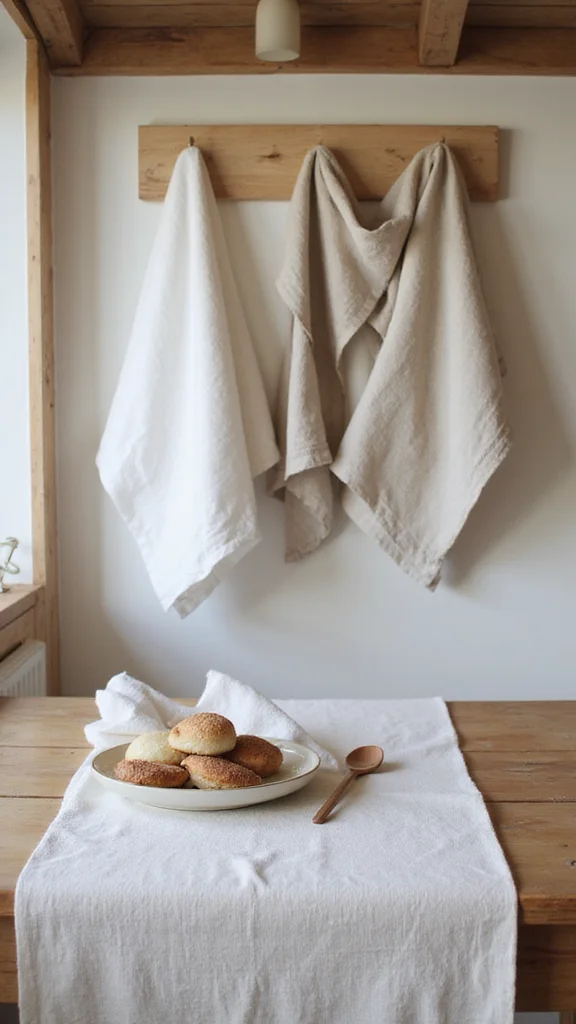
Textiles add warmth and comfort to your Japandi kitchen. Choose natural materials like cotton, linen, or wool for items like dish towels and table runners. Stick to a neutral or muted color palette to enhance the inviting feel of your space. This thoughtful choice softens the hard elements of your kitchen, making it cozier.
Use linen dish towels in soft earth tones for a stylish touch. Consider hanging a woven tapestry to add texture and interest. Soft cushions for seating can invite comfort and relaxation.
• Use linen towels in soft colors.
• Hang a woven tapestry for texture.
• Add cushions for inviting seating.
• Stick to natural materials for warmth.
These textiles help turn your kitchen into a more welcoming space.
10. Eco-Friendly Materials
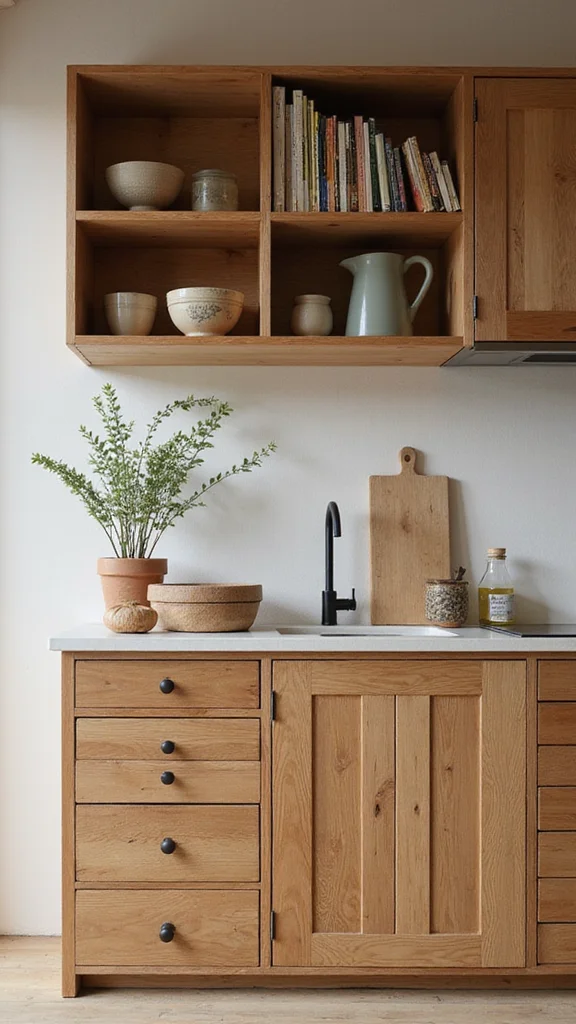
Sustainability is at the heart of Japandi design, making eco-friendly materials a smart choice. Opt for sustainably sourced wood, recycled materials, or non-toxic finishes to create a stylish and responsible kitchen. This approach reflects a growing trend towards environmental awareness.
Consider using bamboo for cabinets, which is both durable and renewable. Recycled glass countertops can be stunning and help reduce waste. Low-VOC paints ensure a safe and healthy environment.
• Choose bamboo cabinets for sustainability.
• Use recycled glass for countertops.
• Select low-VOC paints for safety.
• Look for materials that are environmentally friendly.
By focusing on eco-friendly materials, you create a beautiful kitchen while supporting the planet.
11. Subtle Patterns and Textures
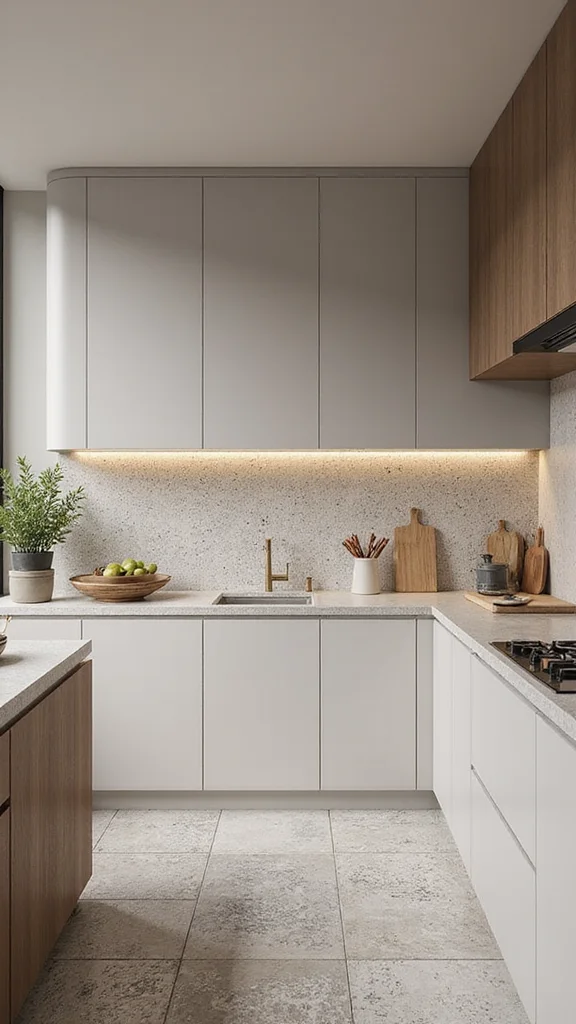
While Japandi kitchens embrace minimalism, subtle patterns and textures can enrich your design. Consider patterned tiles for the backsplash or textured wall finishes that add interest without overwhelming the space. These details can enhance the serene vibe of your kitchen.
Opt for geometric tiles in soft colors for a modern touch. Textured plaster walls can bring warmth and character. Layering materials can create visual contrast while keeping the overall look simple.
• Use geometric tiles for a stylish backsplash.
• Choose textured walls for warmth.
• Layer materials for visual contrast.
• Stick to understated patterns to maintain simplicity.
These touches of pattern and texture can make your kitchen more inviting while adhering to the Japandi philosophy.
12. Smart Storage Solutions
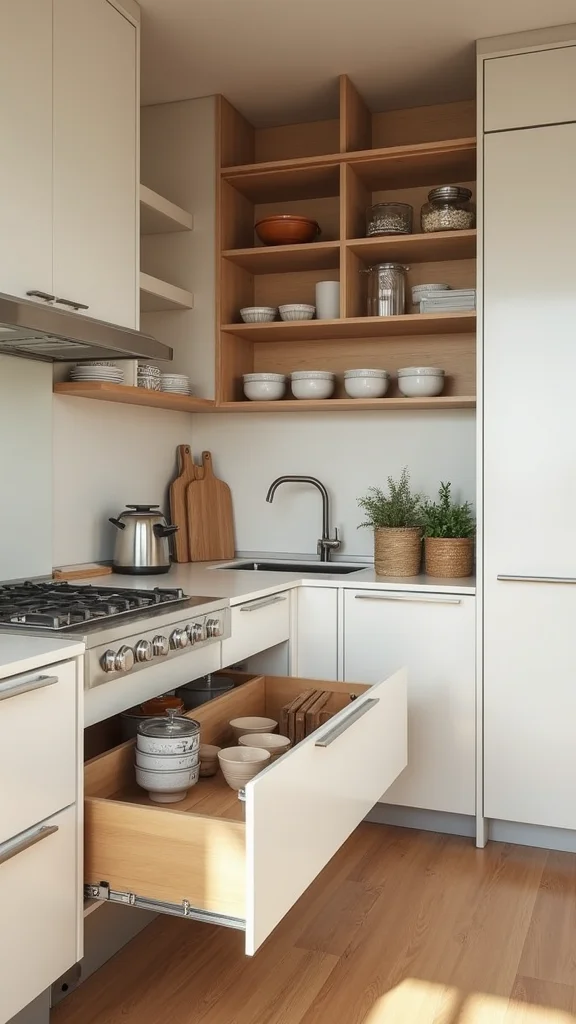
Effective storage solutions are vital in a Japandi kitchen. A clutter-free space enhances the minimalist look while ensuring everything has its place. Built-in cabinets, pull-out drawers, and hidden compartments help maximize space and keep your kitchen tidy.
Implement drawer organizers to keep utensils neat and easy to find. Use stackable containers for dry goods to save space and maintain order. Hanging hooks for pots and pans can keep them accessible and stylish.
• Use drawer organizers for utensils.
• Choose stackable containers for dry goods.
• Install hooks for pots for easy access.
• Opt for cabinets that blend with your kitchen style.
Smart storage keeps your kitchen functional while maintaining a tranquil atmosphere.
13. Thoughtful Lighting Design
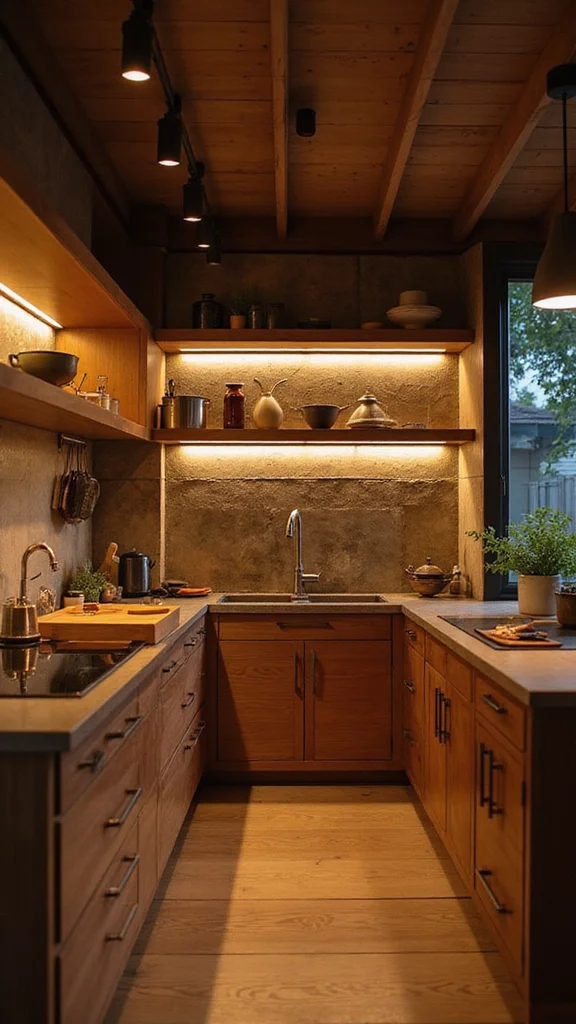
Lighting is essential for creating the right mood in your Japandi kitchen. Aim for a combination of ambient, task, and accent lighting that enhances functionality while adding warmth. Consider pendant lights over the island or under-cabinet lighting to brighten work areas.
Select soft, warm LED bulbs for a cozy glow. Fixtures made of natural materials like wood or woven rattan can complement your design. Dimmers can help adjust lighting levels throughout the day.
• Use soft LED bulbs for warmth.
• Choose natural material fixtures for style.
• Incorporate dimmers for versatility.
• Illuminate work areas with under-cabinet lighting.
A well-planned lighting setup makes your kitchen inviting and practical.
14. Multi-Functional Spaces
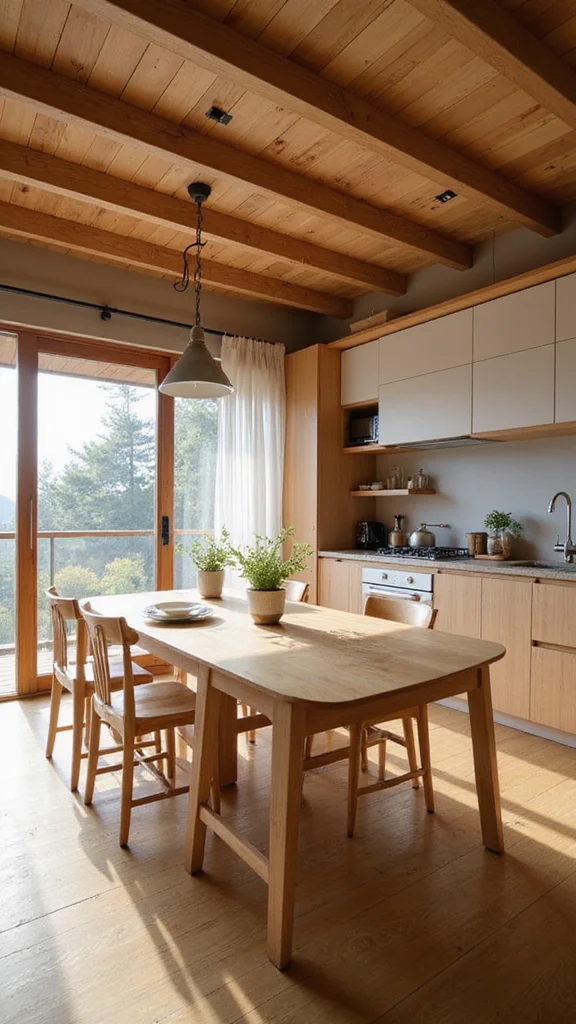
A Japandi kitchen often serves multiple purposes. It’s essential to design spaces that can adapt to various functions. Think about integrating a dining area or a cozy reading nook for relaxation within your kitchen.
Use a kitchen island that can double as a dining table. Benches with storage can provide extra seating and utility. Choose decor that is both stylish and practical, enhancing the kitchen’s functionality.
• Use a multi-functional island.
• Incorporate benches with storage for utility.
• Choose decor that serves a dual purpose.
• Ensure the layout fosters community and connection.
This approach makes your kitchen a welcoming space for both individual activities and social gatherings.
15. Incorporation of Greenery
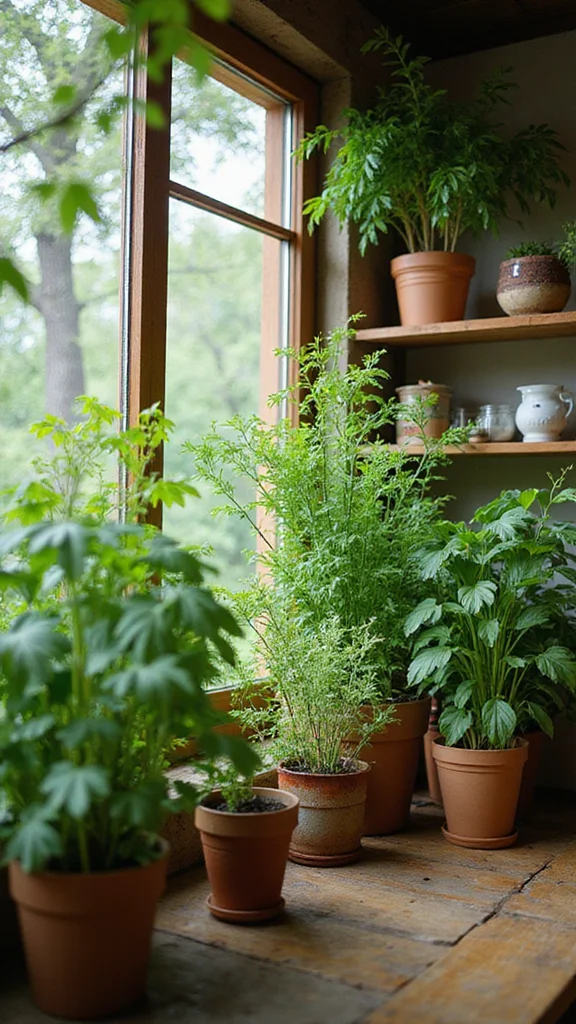
Bringing plants into your Japandi kitchen adds vibrancy and freshness. Greenery not only purifies the air but also offers a lively contrast to neutral tones and wooden features. Consider using herbs on the windowsill for beauty and practicality, or larger potted plants for a bold statement.
Small pots of basil or rosemary can be handy while cooking. Succulents or ferns require little care and add charm. A large indoor tree can create a striking focal point in your kitchen.
• Use herbs on windowsills for convenience.
• Add low-maintenance plants for ease.
• Choose a large indoor tree for impact.
• Incorporate greenery that matches your kitchen style.
By inviting nature indoors, your kitchen becomes a lively and nurturing space.
16. Classic Japanese Ceramics
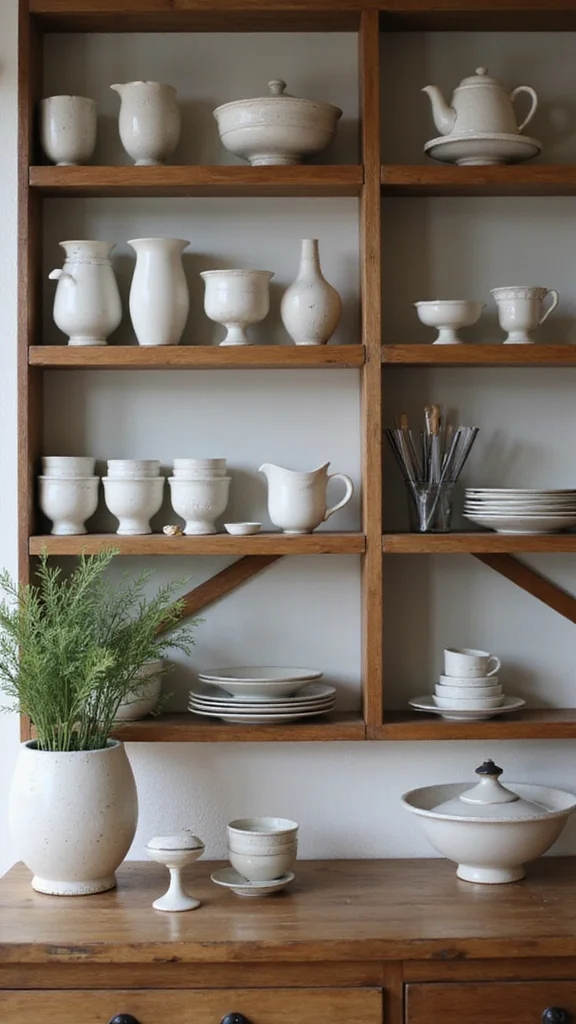
Incorporate classic Japanese ceramics to add elegance to your kitchen. These pieces often feature clean lines and earthy tones that blend seamlessly with the Japandi style. You can display them on open shelves or use them functionally in your kitchen for a beautiful touch.
Consider handmade tea sets for a relaxing moment or unique serving dishes that double as decor. Simple bowls can enhance your table settings with their delicate charm.
• Display handmade tea sets for beauty.
• Use unique serving dishes as decor.
• Choose simple bowls to elevate table settings.
• Incorporate ceramics that reflect your style.
Adding these pieces enriches your kitchen while honoring Japandi design.
17. Artisanal Craftsmanship
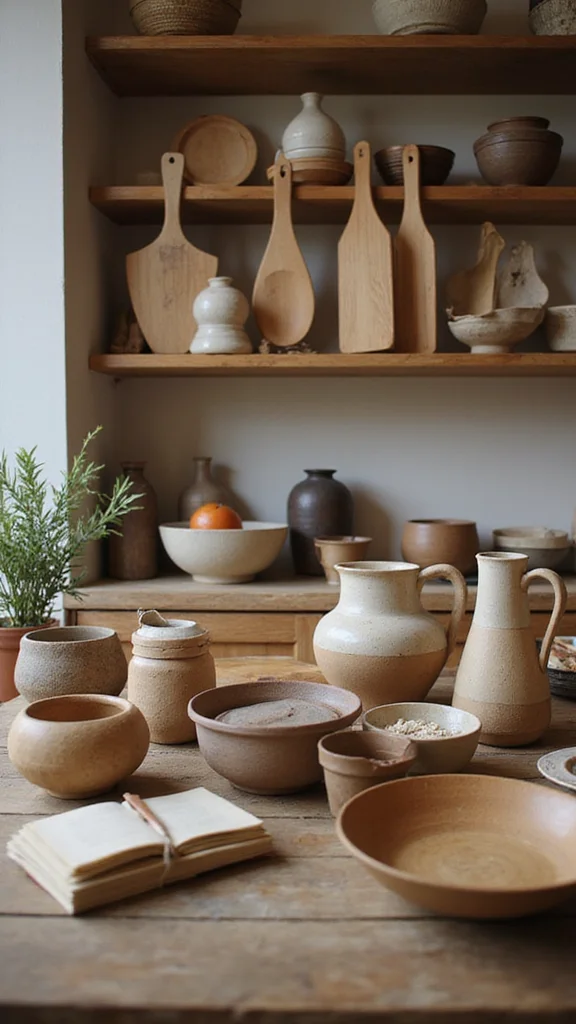
Embrace artisanal craftsmanship by choosing handmade items for your kitchen. Unique, handmade pieces showcase skill and individuality, adding a personal touch to your space. Look for locally made goods or artisan market finds that align with your aesthetic.
Consider hand-turned wooden bowls or utensils for functionality and style. Unique pottery pieces can add character, while customized storage solutions from local craftsmen enhance your kitchen’s personality.
• Select handmade kitchen tools for uniqueness.
• Look for unique pottery pieces for charm.
• Choose custom storage solutions for practicality.
• Support local artisans to enhance your space.
Incorporating artisanal pieces not only beautifies your kitchen but also supports local creativity.
18. A Blend of Old and New
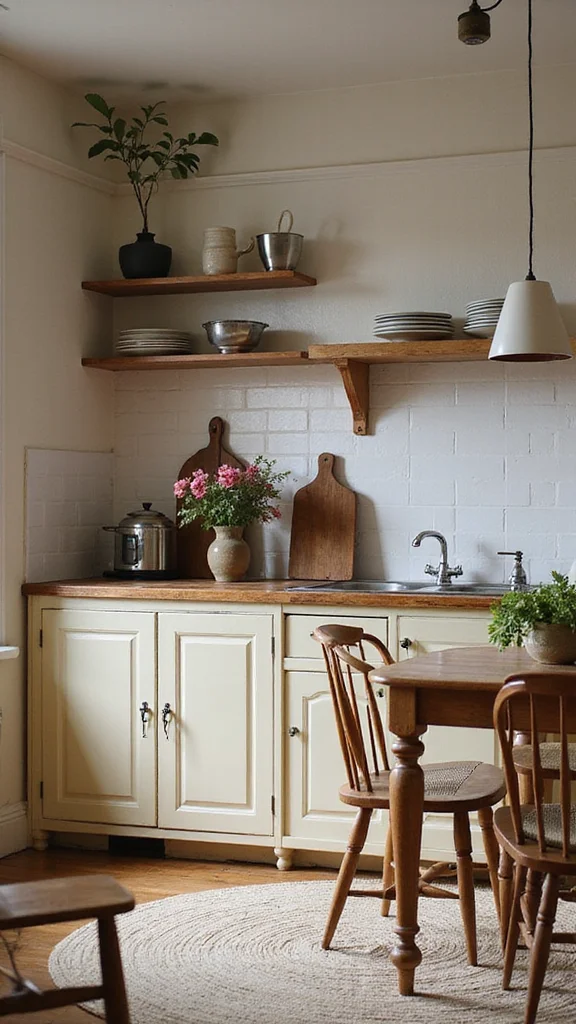
Japandi design shines by blending antique and contemporary elements. Mixing vintage finds with modern pieces creates a rich, layered look in your kitchen. You can pair an antique dining table with sleek modern chairs or combine classic dishware with contemporary glassware.
Seek unique antiques from second-hand shops or flea markets for character. Keep the color scheme consistent to ensure harmony between old and new. Using a minimalist backdrop allows vintage pieces to stand out beautifully.
• Source unique antiques for character.
• Maintain a consistent color scheme for harmony.
• Use a minimalist backdrop to highlight vintage finds.
• Mix styles for a personalized touch.
This blend brings depth and individuality to your kitchen.
19. Clear Lines and Simple Geometry
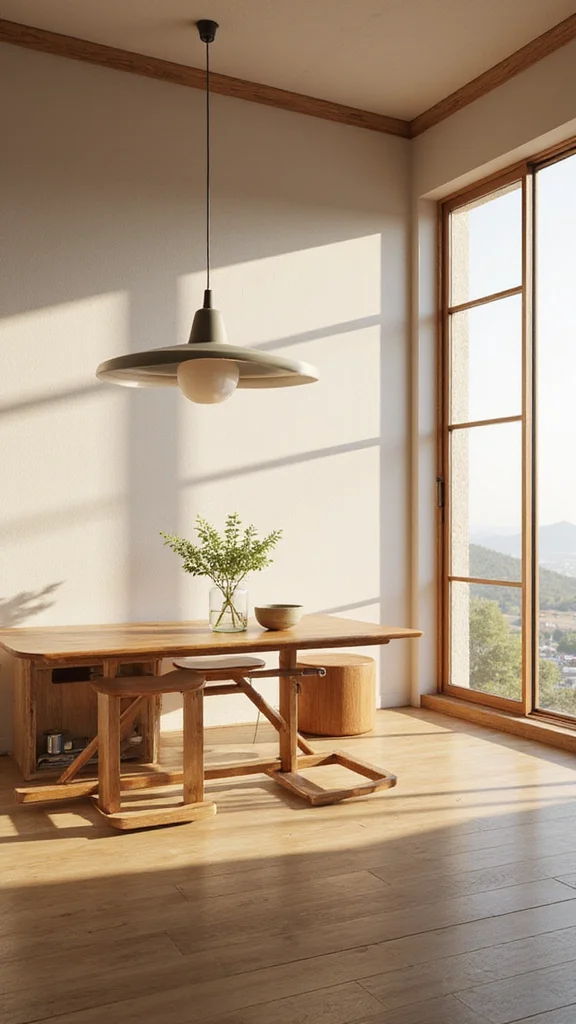
The Japandi aesthetic thrives on clear lines and geometric shapes. This design principle fosters order and tranquility, making your kitchen a visually calming space. Incorporate geometric designs in cabinetry, countertops, and accessories to reinforce this theme.
Choose square or rectangular islands for a streamlined look. Flat-front cabinets provide a clean finish, while accessories with simple geometric designs can add subtle interest.
• Incorporate square islands for simplicity.
• Use flat-front cabinets for a clean finish.
• Choose accessories with geometric designs.
• Emphasize clear lines for a sophisticated look.
This focus on geometry creates a refined and uncluttered kitchen.
20. Breathe Life Through Art
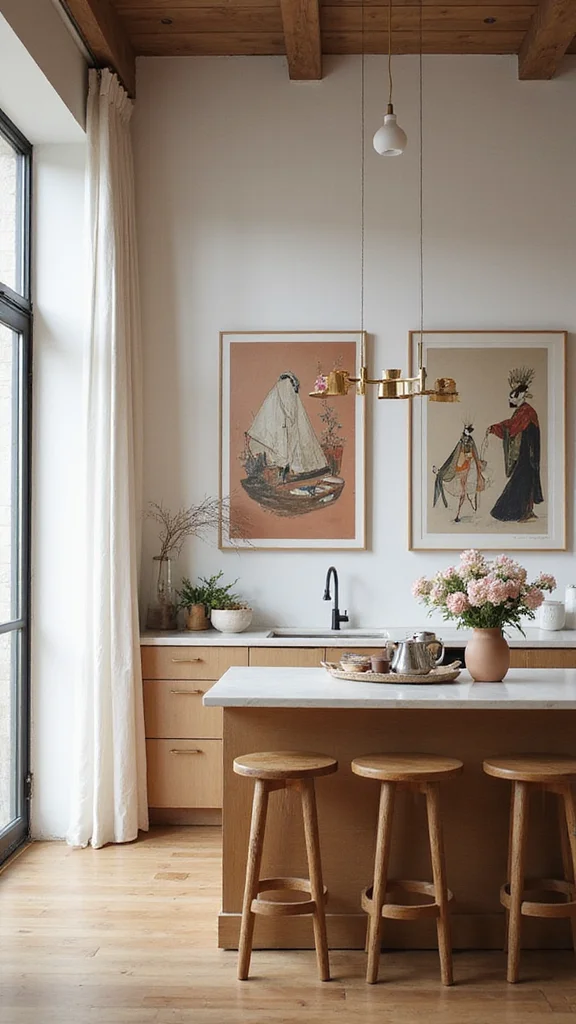
Art adds a unique touch to your Japandi kitchen while showcasing your personality. Choose pieces that harmonize with your color palette and enhance the kitchen’s overall atmosphere. Abstract prints, minimalist photography, or traditional Japanese art can resonate with the design philosophy.
Display art by hanging framed pieces at eye level for easy viewing. Create a gallery wall with a variety of styles and sizes or use art as a backdrop for open shelving.
• Hang art at eye level for visibility.
• Create a gallery wall for interest.
• Use art as a backdrop for shelves.
• Choose pieces that resonate with your style.
Art breathes life into your kitchen, making it feel uniquely yours.
21. Timeless Design with a Modern Twist
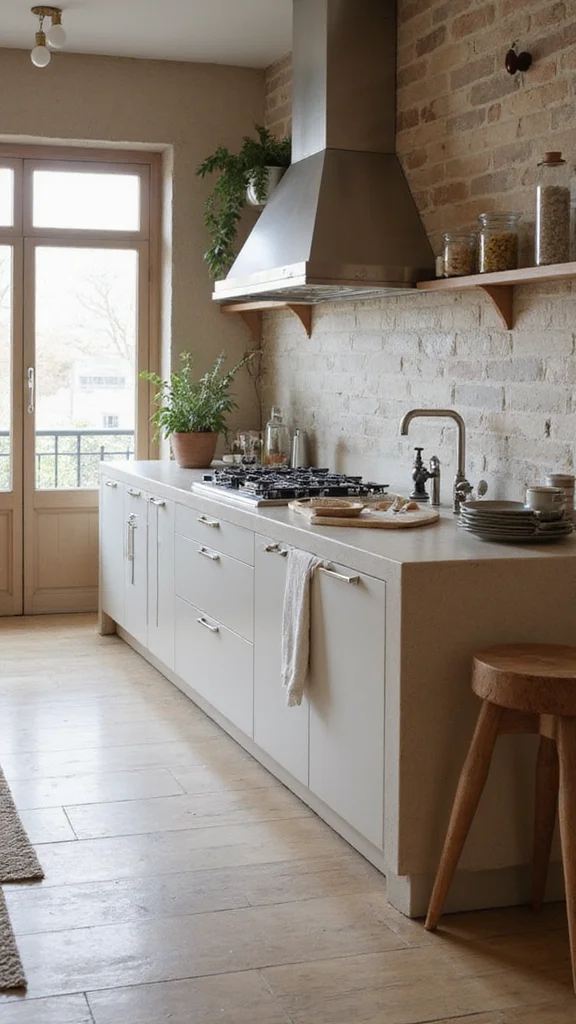
Japandi design blends timeless elegance with a modern twist. Focus on classic elements while reinterpreting them with contemporary materials or techniques for a fresh feel. This fusion keeps your kitchen stylish and relevant.
For example, use traditional Japanese joinery techniques in a modern cabinet design or pair classic ceramic materials with sleek metal accents. This balance of old and new creates a harmonious kitchen experience.
• Combine traditional techniques with modern designs.
• Use contemporary materials alongside classic ones.
• Ensure a consistent style throughout.
• Keep functionality in mind while designing.
This approach results in a kitchen that feels both timeless and contemporary.
22. Seasonal Decor Updates
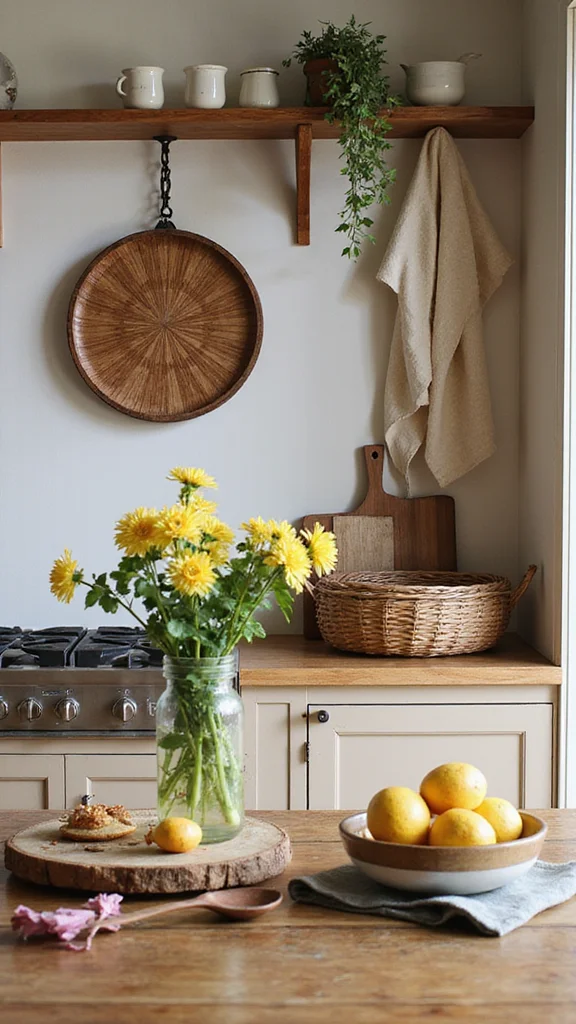
Keep your Japandi kitchen feeling fresh with seasonal decor updates. This practice allows you to reflect the changing seasons while maintaining the essence of your style. Use natural elements like flowers in spring, vibrant leaves in autumn, or cozy textiles in winter for a dynamic touch.
Consider changing dish towels or table runners to reflect seasonal colors. Adding a vase of seasonal blooms can bring a burst of life. Rotate decor pieces in and out to keep the space lively and engaging.
• Change dish towels seasonally for freshness.
• Add seasonal flowers for color.
• Rotate decor pieces for added interest.
• Incorporate natural elements to reflect the season.
These updates keep your kitchen lively and inviting throughout the year.
23. Personalized Touches
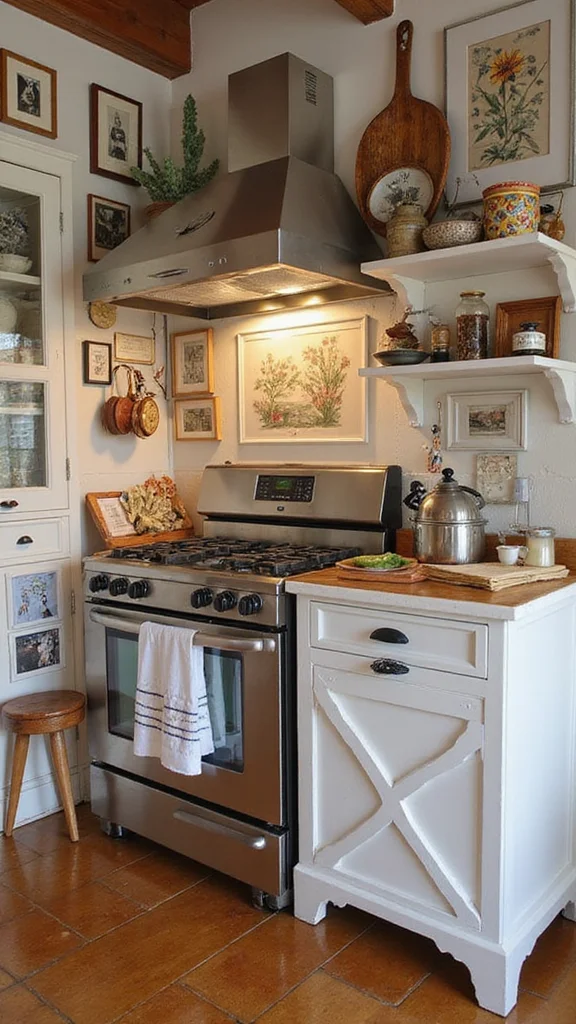
Your Japandi kitchen should showcase your unique personality and lifestyle. Adding personalized touches like family heirlooms, travel souvenirs, or handmade artwork can make the space truly yours. This could include a custom cutting board from a local artisan or a piece of wall art that holds special memories.
Display family photos in simple frames for warmth. Use decorative bowls or jars collected from your travels as charming decor. Allow your kitchen to evolve as you gather new memories and treasures over time.
• Display family photos for warmth.
• Use decorative bowls from travels.
• Choose handmade items that reflect your style.
• Let your kitchen evolve with new memories.
These personalized elements make your kitchen a cherished place for you and your loved ones.
24. Serenity Through Symmetry
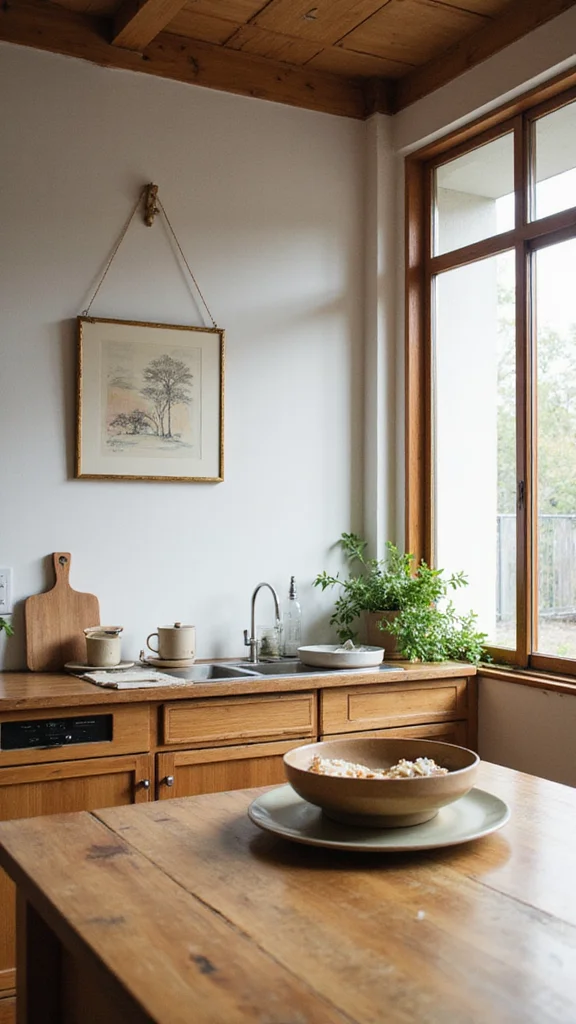
Symmetry is a powerful principle in Japandi design, promoting harmony and balance. Arranging kitchen items or decor in symmetrical patterns can create a cohesive look. For example, matching stools at your island or symmetrical wall art can frame a window beautifully.
To achieve symmetry, use similar heights and shapes for decor items. Balance the visual elements across your kitchen for a clean aesthetic. Create equal spacing between items for a polished appearance.
• Arrange items in symmetrical patterns.
• Use similar heights for balance.
• Space items evenly for a clean look.
• Incorporate symmetry in decor for harmony.
This thoughtful arrangement promotes a peaceful atmosphere in your kitchen.
25. Create an Inviting Atmosphere
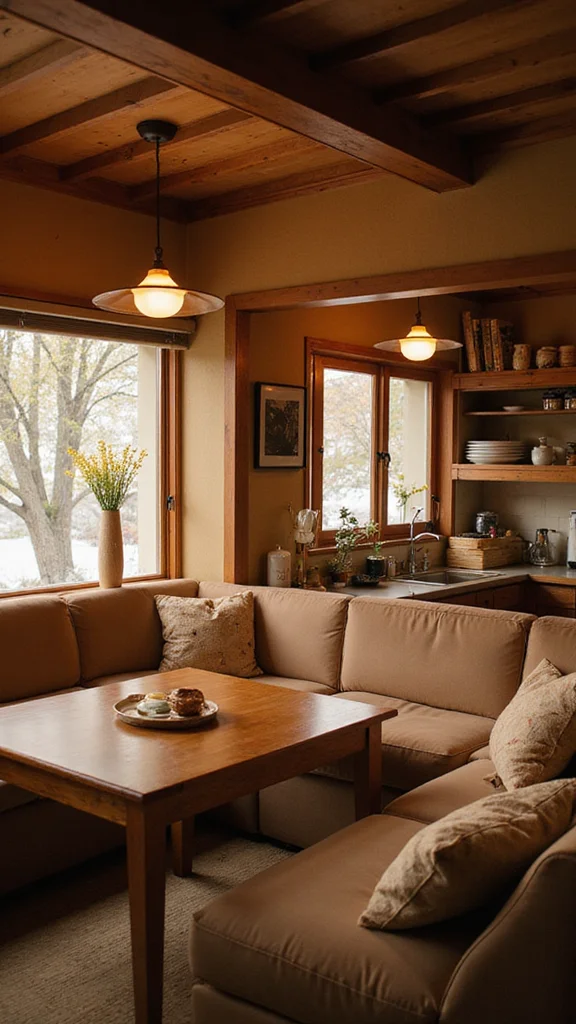
The heart of a Japandi kitchen lies in its inviting atmosphere. Think about how you arrange furniture, lighting, and decor to encourage connection and comfort. Use communal seating, soft lighting, and inviting textiles to create a warm vibe.
Consider adding a cozy nook with cushions for relaxation. Warm lighting can enhance the homey feel, while an open layout fosters easy flow. This thoughtful design makes your kitchen a welcoming place for family and friends.
• Add a cozy nook for comfort.
• Use warm lighting for ambiance.
• Keep the layout open and welcoming.
• Choose decor that invites connection.
By designing with intention, you create a beautiful space that feels like the heart of your home.
Conclusion
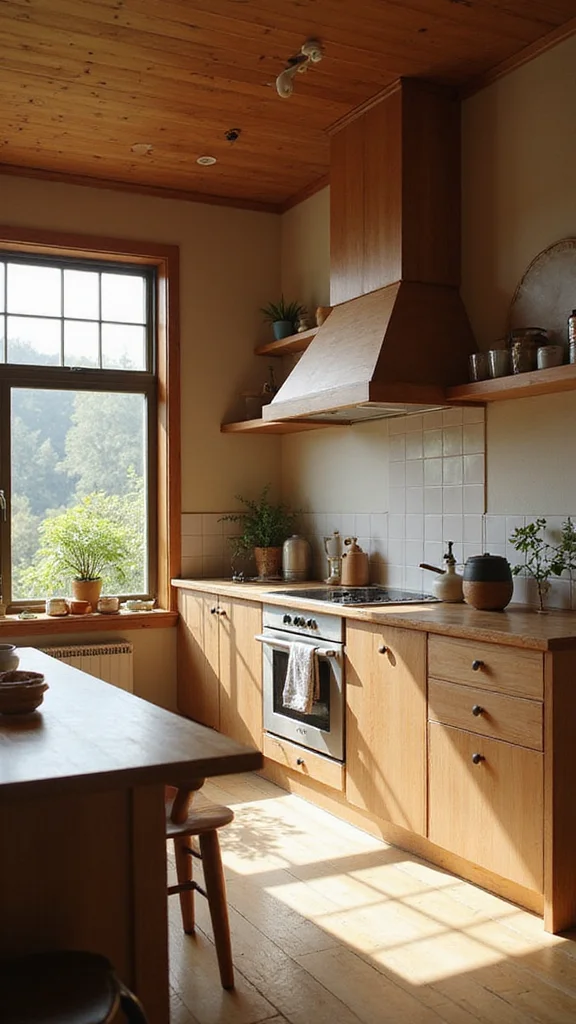
Incorporating Japandi design elements into your kitchen can truly elevate the space, making it both functional and beautiful.
From natural materials to minimalist decor, the key is to create a serene atmosphere that reflects your personality and lifestyle.
Explore these ideas, mix and match them according to your taste, and enjoy crafting a kitchen that’s not just a place to cook, but a warm, inviting hub for family and friends.
Frequently Asked Questions
What is a Japandi kitchen and how is it different from other styles?
A Japandi kitchen combines the minimalist elegance of Japanese design with the warm, rustic charm of Scandinavian aesthetics. This style emphasizes clean lines, functional furniture, and a neutral color palette, creating a calming atmosphere. Unlike other styles, Japandi focuses on simplicity and natural materials, allowing for a serene and clutter-free space that promotes mindfulness in cooking and dining.
How can I incorporate Japandi elements into my kitchen?
To bring Japandi vibes into your kitchen, start by choosing natural materials like wood, stone, and ceramics for furniture and decor. Opt for a muted color scheme with soft earth tones and whites. Use multi-functional furniture to maximize space and keep surfaces clear of clutter. Finally, add plants or natural elements to enhance the overall warmth and connection to nature that defines Japandi style.
What are the best color schemes for a Japandi kitchen?
The best color schemes for a Japandi kitchen typically include neutral tones like beige, taupe, and soft gray, accented with deep greens or muted blues. These colors create a tranquil backdrop that highlights the beauty of natural materials. You might also consider adding darker woods or black accents for contrast, which can add depth and sophistication to your space.
Can I mix Japandi design with other styles, like modern or rustic?
Absolutely! Mixing Japandi design with other styles can create a unique and personalized space. For instance, you can combine modern elements like sleek appliances and geometric patterns with the organic textures and simplicity of Japandi. Just ensure that the overall aesthetic remains cohesive by sticking to a similar color palette and focusing on minimalism to avoid overwhelming the space.
What are some decor tips to enhance my Japandi kitchen?
To enhance your Japandi kitchen, focus on functional decor that serves a purpose while being aesthetically pleasing. Choose simple, beautiful dishware and utensils that can be displayed openly. Consider adding a statement piece, like a handmade vase or a piece of art, but keep it minimal. Lighting plays a crucial role as well; opt for soft, warm lights to create an inviting atmosphere that complements the serene Japandi style.